Call for Ban on Photo Retouching in Ads by UK's Liberal Democrats
Filed under: News
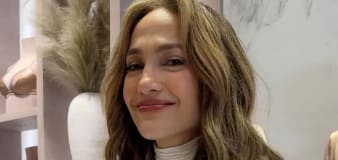
Twiggy in the Olay Definity campaign Photo: Karan Kapoor, Saatchi & Saatchi
Led by Jo Swinson, the East Dunbartonshire seat in the Parliament, the party cites Twiggy's Olay and Jessica Alba's Campari ads when talking about the problem with photo retouching.
In Twiggy's case, the UK paper points out that the model's age lines have been removed and as far as Alba, the actress looks far slimmer in the ads than in original photos.
Swinson explians: "Airbrushing means that adverts contain completely unattainable images that no one can live up to in real life. We need to protect children from these pressures and we need to start by banning airbrushing in adverts aimed at them. We need to help protect children from these pressures and we need to make a start by banning airbrushing in adverts aimed at them," as reported by the Telegraph.
To solve this problem, the Liberal Democrats are proposing that the Advertising Standards Authority ban all retouched images in advertising aimed at those age 16 and under, while ads aimed at adults have to clearly state how much they have been airbrushed or digitally enhanced.
What do you think? Should standards on photo retouching also be imposed in the U.S.? Or is airbrushing just part of today's digital advertising age? Leave a comment!


Axel Sander 8-10-2009 @ 8:49PM
The regulation of “misrepresentation” in photographic representation proposed by the Liberal-Democrats constitutes a new low in legislative vapidity, foolishness and ignorance. An astounding inverse ratio of regulatory ambition to actual knowledge of that which is putatively to be regulated.
This law, floated by liberal-Democarat MP’s is conceived and presented in terms of a “fair-play” approach to the “honest” representation of, to be specific, women’s bodies in the media. It is proposed that this regulation need peculiarly apply to “digital” modification of images. Such thinking only being possible on the part of persons who are utterly ignorant of the processes involved in determining impressions of a model in photography in any case. It rests on a complete ignorance of any grasp of the role played by such variables as camera and lens type, focal-length, angle of shot, type, angle and mix of lighting, distance of camera from model, position of photographer and pose of model….in determining the appearance of such things as the models height, weight, bodily proportions, limb length, facial features, complexion, age and even gender. Quite irrespective of any subsequent “manipulation” and in any case, since photography began, “digital” being neither here nor there. With such variables it is entirely possible to make a person look six inches taller, five stone lighter and ten years younger. Without any “digital manipulation”. I haven’t even mentioned invisible tape, safety pins or the effect of simply shoving some tissues in the right place before a shot!
Will the law require a summary of all these variables to be included with every publication of an image? To be frank, with modern EXIF data, it would be possible to require the declaration of most such information. How ridiculous would that be! Yet how ridiculous is a proposed law that would attend to only the one post-exposure feature of the process, because it is garlanded by that magic word “digital”, which in the minds of only the knowledge-free seems to portend a kind of distortion unique and unprecedented in the annals of photography. To such people who no doubt believe that a non-digital image is one from a camera that doesn’t lie! In other words, someone who seems to know or pretend to know utterly nothing about photography!
Next there arises the question as to whom the proposed regulation would apply? Will it apply to all photographic images or only those of women? To all women or only celebrities? To all photographers or only professionals? To all professionals or only those who are working for “the media”? To all publications or only “glossies” or those with a certain circulation? Books as well or only serials? If not both, then what of images from books ( such as a limited edition movie-related photo-book ) reproduced in a magazine? So would it apply to all books? Does it then represent a new regime of regulation spanning all of photography? Will my pictures of Aunty Norah have to have a “health warning” ( “this image uses digital techniques to disguise Aunty Norah’s weight…sorry Aunty Norah, I had to declare this by law” )? Or will it only apply to some photography? In which case who decides where it does or doesn’t apply? What of photos in an exhibition? What if the image in an exhibition is exempt but can then be reproduced in a magazine, carrying over that exemption? Or will that require retrograde application of the rules backwards onto the original in the exhibition?
I don’t think the politicians who proposed this law have actually thought about such questions. But I am only getting started. It gets worse!
A Member Parliament chose on Channel Four news to refer to the example of a picture of Keira Knightley produced in relation to the movie “King Arthur”. It was stated that “digital manipulation” were used to make her breasts seem larger. Now, leaving aside the fact that skilled photographers have always had that ability, and used it, since the beginning of Hollywood, this poses other problems peculiar to the digital environment. Today, many movies are to a very large extent a product of CGI ( Computer Generated Imagery ). Indeed, we are on the verge of having entire characters inserted from a computer template, which may or may not be modelled on a real actor. Which may or may not “enhance” such features as Keira Knightley’s breasts. In any event, all the representational factors that apply to still photography, such as focal-length, lighting, angle of shot, have equal bearing upon the moving image. Are we to take it that every appearance of Keira Knightley on-screen is to be accompanied by a “health-warning” such as “…Keira’s breasts aren’t as big as they look” ? On the other hand, if the actress has her breasts digitally enhanced throughout the movie, is this going to be exempted from the rules applying to the stills and promotional shots? If not, that is a pretty gigantic omission. Given that readers in a magazine will flip over a photo in a second but must sit through a movie for hours! What about magazines publishing “stills” supposedly extracted from the movie and in that case exempt? Who will sit down poring over magazines trying to determine which images were taken from a movie and exempt from the regulations and which were not, and which among those not extracted from the footage but shot on set are or are not legitimate? How would such determinations be made? For literally millions of images published every year!

As I say, I could go on. I have only just started with the litany of difficult questions posed by such a putative law. But I think we have here already enough to indicate that at the very least such a law would be more full of loop-holes than La Haye Sainte at the battle of Waterloo! Yet, that if it were imposed, such a regulatory regime would be as ridiculous, encumbering and unfair as it is absurd.
Nor is this the end of the issue. For the very fact that a member of parliament would seriously conceive, devote time to and purloin resources to the legislative process of considering such a law is a shocking indictment of the condition of politics and government in Britain today. I recall how, during the Cold War we would laugh at Albania’s law making beards illegal. The irony is that we were not then aware of issues relating to the suppression of Islamist dissent as we are now. So we now realise that Hoxa had a practical motive for his barmy ban! Yet today, in this country, our legislators can seriously propose, table for discussion and squander time and resources upon laws that seek to impose regulations upon even the most innocuous activities. Moreover based upon both an absolute and astounding ignorance of those activities and apparently an utterly clue-less inability to think through any of the implications of the proposition.

This proposed law is sinister, stupid and actually rather sick. That such a law can even be contemplated embodies the divorce of our governing oligarchies from the real world in which under their laws the rest of us must live, and the utterly parlous state of British “democracy”.
Reply